RESIDENCIA No. 15
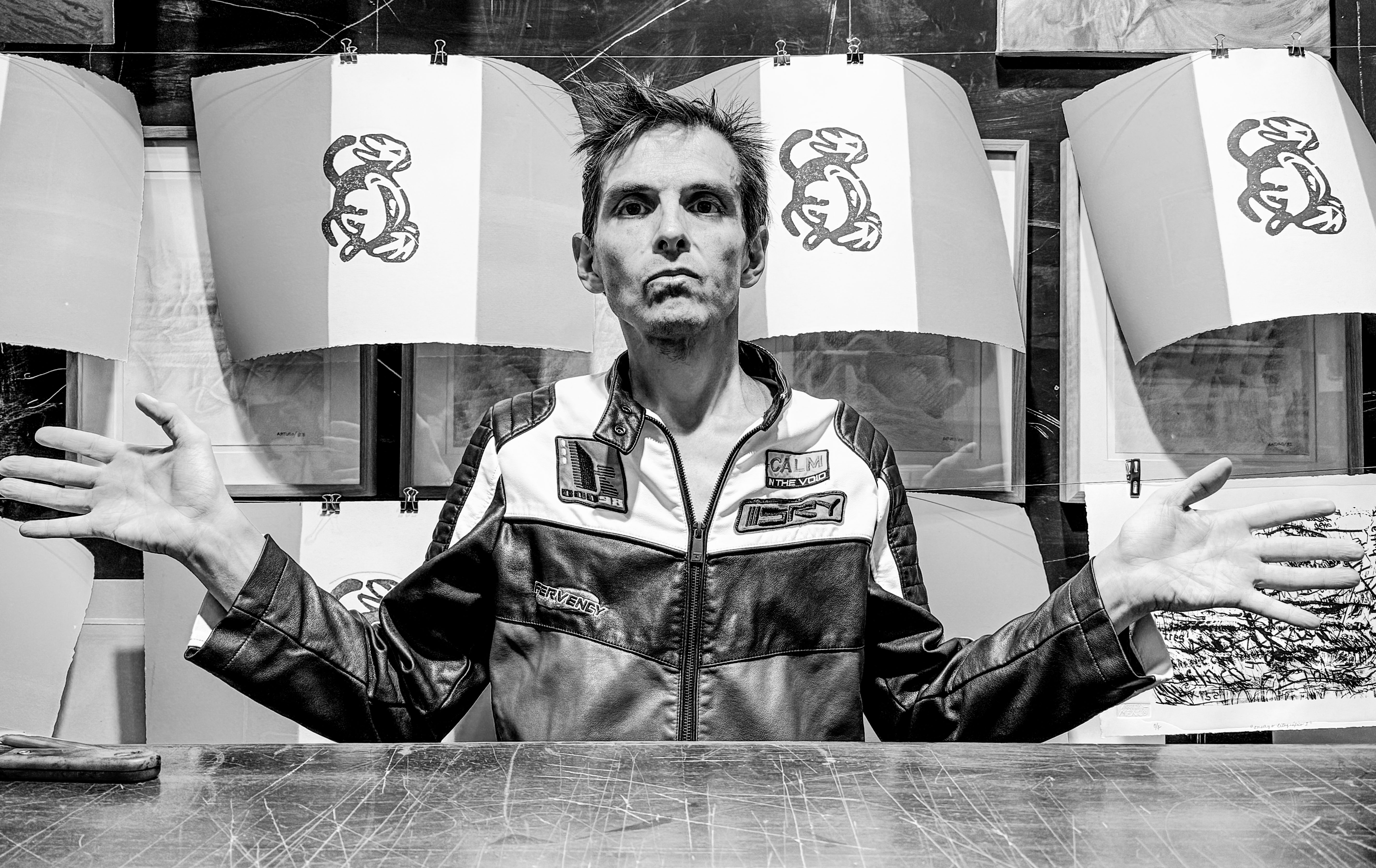
Miki Guadamur y las convenciones de lo subversivo, por Ricardo Pohlenz
Pensemos en los usos y costumbres del Kapital, así, escrito con K, haciendo referencia directa a Karl Marx –escrito igual con K– y a Federico Engels, aunque este último no figure tanto, siendo un comparsa que no tuvo el peso iconográfico que le fue dado a Marx a lo largo del siglo pasado, comparable en su impacto al que tuvieron Periquita, Lorenzo Parachoques, el ratón Miguelito o Carlitos Brown.
Los pongo así, del modo en que fueron dichos (o vendidos) en algún momento, traducidos o vertidos a versiones en castellano –tropicalizados, se diría ahora– que se impusieron como contenido ilustrado en periódicos y a través de publicaciones periódicas a todo color vendidas en kioskos como el fuego nuevo que nos venía a traer las convenciones que desde lo inocuo –en apariencia– de sus contenidos sembraban una expectativa que traslapaba imaginarios para sustituir venas –o venías– idiosincráticas con empaques convencionales que –como el pan blanco invocado tras el nombre del colectivo del que Guadamur formó parte– se asumen y acaban convertidos en bienes asequibles al acervo nacional.
El Osito Bimbo y la Planta de Júmex nos son presentados como signos o síntomas de una integración apocalíptica de tópicos –para darle su huequito a Eco– que nos han supuesto –todavía– una forma de invasión en donde lo moderno tiene que ver más con el laminado del mueble que con una economía que subsiste –monstruo de sí misma– con negociaciones, intercambios e imposiciones entre las naciones soberanas (y no tanto).
Cabe asumir que Guadamur se rinde a este monstrismo, derivando constricciones –que no construcciones– goyescas sublimadas cual ready-mades para insistir y señalar –desde la subversión– los caminos de la convención. Todavía Warhol pero desde otro lugar, diciendo igual un consumo formal –un decir de la línea– pero desde otro lugar, embelleciendo un feísmo, por decirle de algún modo, en la posibilidad de que se convierta –también– en un bien de consumo, una forma de referencia, un desmarcaje que deja de serlo, invisibilizado en su ubicuidad, llevado desde el estampado de camisetas hasta la producción en serie de sus figuras, mismo que al ser impuesto, paradójicamente, se invalida.
Nos queda, de momento, asomarnos al abismo de esa posibilidad, convertidos en íconos de lo convencional, como lo es ahora Karl Marx, una forma de resistencia tan cómoda como superficial.
¿Será ahora que el reto de las convenciones de la subversión sea armar un Donald Trump con el hociquito del otro Donald (el pato) o con orejitas de Mickey Mouse? ¿O sobreponiéndolo –como ejemplo bully de lo patrio– en el cruce del Delaware de Washington retratado por el pintor germano-estadounidense Emanuel Leutze, visto hasta la saciedad en las caricaturas de la Warner, donde resulta inocuo, en tanto referencia escolar, un reconocimiento que lo convierte en homenaje paradójico, un chiste de sí mismo?
No hay más remedio que ser político, pero asumiendo al otro para serlo, desde un lugar que nos señale y sea nuestro reflejo. Señalándolo así, en el espejo, en su arrogancia, en su temeridad.
RICARDO PHOLENZ
Los pongo así, del modo en que fueron dichos (o vendidos) en algún momento, traducidos o vertidos a versiones en castellano –tropicalizados, se diría ahora– que se impusieron como contenido ilustrado en periódicos y a través de publicaciones periódicas a todo color vendidas en kioskos como el fuego nuevo que nos venía a traer las convenciones que desde lo inocuo –en apariencia– de sus contenidos sembraban una expectativa que traslapaba imaginarios para sustituir venas –o venías– idiosincráticas con empaques convencionales que –como el pan blanco invocado tras el nombre del colectivo del que Guadamur formó parte– se asumen y acaban convertidos en bienes asequibles al acervo nacional.
El Osito Bimbo y la Planta de Júmex nos son presentados como signos o síntomas de una integración apocalíptica de tópicos –para darle su huequito a Eco– que nos han supuesto –todavía– una forma de invasión en donde lo moderno tiene que ver más con el laminado del mueble que con una economía que subsiste –monstruo de sí misma– con negociaciones, intercambios e imposiciones entre las naciones soberanas (y no tanto).
Cabe asumir que Guadamur se rinde a este monstrismo, derivando constricciones –que no construcciones– goyescas sublimadas cual ready-mades para insistir y señalar –desde la subversión– los caminos de la convención. Todavía Warhol pero desde otro lugar, diciendo igual un consumo formal –un decir de la línea– pero desde otro lugar, embelleciendo un feísmo, por decirle de algún modo, en la posibilidad de que se convierta –también– en un bien de consumo, una forma de referencia, un desmarcaje que deja de serlo, invisibilizado en su ubicuidad, llevado desde el estampado de camisetas hasta la producción en serie de sus figuras, mismo que al ser impuesto, paradójicamente, se invalida.
Nos queda, de momento, asomarnos al abismo de esa posibilidad, convertidos en íconos de lo convencional, como lo es ahora Karl Marx, una forma de resistencia tan cómoda como superficial.
¿Será ahora que el reto de las convenciones de la subversión sea armar un Donald Trump con el hociquito del otro Donald (el pato) o con orejitas de Mickey Mouse? ¿O sobreponiéndolo –como ejemplo bully de lo patrio– en el cruce del Delaware de Washington retratado por el pintor germano-estadounidense Emanuel Leutze, visto hasta la saciedad en las caricaturas de la Warner, donde resulta inocuo, en tanto referencia escolar, un reconocimiento que lo convierte en homenaje paradójico, un chiste de sí mismo?
No hay más remedio que ser político, pero asumiendo al otro para serlo, desde un lugar que nos señale y sea nuestro reflejo. Señalándolo así, en el espejo, en su arrogancia, en su temeridad.
RICARDO PHOLENZ
Miki Guadamur and the Conventions of the Subversive, by Ricardo PohlenzLet us think about the uses and customs of Kapital—yes, spelled with a K—making a direct reference to Karl Marx (also spelled with a K) and to Friedrich Engels, although the latter is far less mentioned, a sidekick who never gained the same iconographic weight that was granted to Marx throughout the last century, comparable in impact to that of Little Lulu, Bumper Morgan, Mickey Mouse, or Charlie Brown.
I list them this way, in the manner they were once spoken of (or sold), translated or adapted into Spanish versions—tropicalized, as one would say now—that established themselves as illustrated content in newspapers and in full-color periodicals sold at kiosks, like a new fire meant to bring us the conventions that, from the seemingly harmlessness of their content, planted an expectation that overlapped imaginaries to replace idiosyncratic veins—or ways of coming into being—with conventional packages that—like the white bread invoked by the name of the collective Guadamur once belonged to—become assumed and finally turned into goods assimilated into the national inventory.
The Bimbo Bear and the Jumex Plant are presented to us as signs or symptoms of an apocalyptic integration of tropes—to give Umberto Eco his little space—that still imply a form of invasion, one in which modernity has more to do with the veneer of furniture than with an economy that survives—monster of itself—through negotiations, exchanges, and impositions among sovereign (and not-so-sovereign) nations.
It might be assumed that Guadamur yields to this monstrism, deriving constrictions—not constructions—Goya-like sublimations turned into ready-mades that insist on and point out—through subversion—the paths of convention. Still Warhol, but from elsewhere: articulating a formal consumption—a saying of the line—but from another place; beautifying an ugliness, so to speak, with the possibility of also becoming a consumer good, a form of reference, an unmarking that ceases to be one, made invisible by its ubiquity, carried from T-shirt prints to mass-produced figures, which, once imposed, paradoxically invalidate themselves.
For now, we can only peer into the abyss of that possibility—turned into icons of convention ourselves, as Karl Marx has now become—a form of resistance as comfortable as it is superficial.
Might it be, then, that the challenge of subversive convention today is to assemble a Donald Trump with the little snout of the other Donald (the duck), or with Mickey Mouse’s ears? Or to superimpose him—as a bullying example of patriotic imagery—onto Washington Crossing the Delaware, painted by the German-American artist Emanuel Leutze, seen ad nauseam in Warner Bros. cartoons, where it becomes harmless as a school reference, a recognition that turns into a paradoxical homage, a joke at its own expense?
There is no other remedy than to be political—but by assuming the other in order to be so, from a place that points to us and serves as our reflection. Pointing at it thus, in the mirror, in its arrogance, in its recklessness.
RICARDO PHOLENZ
I list them this way, in the manner they were once spoken of (or sold), translated or adapted into Spanish versions—tropicalized, as one would say now—that established themselves as illustrated content in newspapers and in full-color periodicals sold at kiosks, like a new fire meant to bring us the conventions that, from the seemingly harmlessness of their content, planted an expectation that overlapped imaginaries to replace idiosyncratic veins—or ways of coming into being—with conventional packages that—like the white bread invoked by the name of the collective Guadamur once belonged to—become assumed and finally turned into goods assimilated into the national inventory.
The Bimbo Bear and the Jumex Plant are presented to us as signs or symptoms of an apocalyptic integration of tropes—to give Umberto Eco his little space—that still imply a form of invasion, one in which modernity has more to do with the veneer of furniture than with an economy that survives—monster of itself—through negotiations, exchanges, and impositions among sovereign (and not-so-sovereign) nations.
It might be assumed that Guadamur yields to this monstrism, deriving constrictions—not constructions—Goya-like sublimations turned into ready-mades that insist on and point out—through subversion—the paths of convention. Still Warhol, but from elsewhere: articulating a formal consumption—a saying of the line—but from another place; beautifying an ugliness, so to speak, with the possibility of also becoming a consumer good, a form of reference, an unmarking that ceases to be one, made invisible by its ubiquity, carried from T-shirt prints to mass-produced figures, which, once imposed, paradoxically invalidate themselves.
For now, we can only peer into the abyss of that possibility—turned into icons of convention ourselves, as Karl Marx has now become—a form of resistance as comfortable as it is superficial.
Might it be, then, that the challenge of subversive convention today is to assemble a Donald Trump with the little snout of the other Donald (the duck), or with Mickey Mouse’s ears? Or to superimpose him—as a bullying example of patriotic imagery—onto Washington Crossing the Delaware, painted by the German-American artist Emanuel Leutze, seen ad nauseam in Warner Bros. cartoons, where it becomes harmless as a school reference, a recognition that turns into a paradoxical homage, a joke at its own expense?
There is no other remedy than to be political—but by assuming the other in order to be so, from a place that points to us and serves as our reflection. Pointing at it thus, in the mirror, in its arrogance, in its recklessness.
RICARDO PHOLENZ